The Beginner's Guide to Double Gameweek Strategy: How to Use Your Chips Like a Pro

Double Gameweeks are your secret weapon to climb the Fantasy Premier League rankings. While other managers panic about schedule changes and fixture congestion, you'll be positioned to dominate your mini-league by maximizing these golden opportunities.
A Double Gameweek occurs when at least one Premier League club plays two fixtures in a single Gameweek. This typically happens when matches get postponed due to cup competitions like the FA Cup or EFL Cup, then rescheduled into other Gameweeks. The result? Some players get two chances to haul points instead of one.
Why Double Gameweeks Are Your Unfair Advantage 📈
Think about the math here. In a normal Gameweek, your 11 starting players give you 10 matches worth of scoring opportunities (since one player is your goalkeeper). But if you stack your team with players who have two fixtures, you're suddenly looking at 20 potential matches from the same 11 players.
Scale that across your entire 15-man squad during a massive Double Gameweek, and you're generating 30 matches worth of points. That's triple the normal output from the same team selection. This multiplier effect is exactly why the top 1% of FPL managers plan their entire season around these windows.
The key insight? While casual players see fixture congestion as complexity, smart managers recognize it as the biggest points-scoring opportunity of the season.
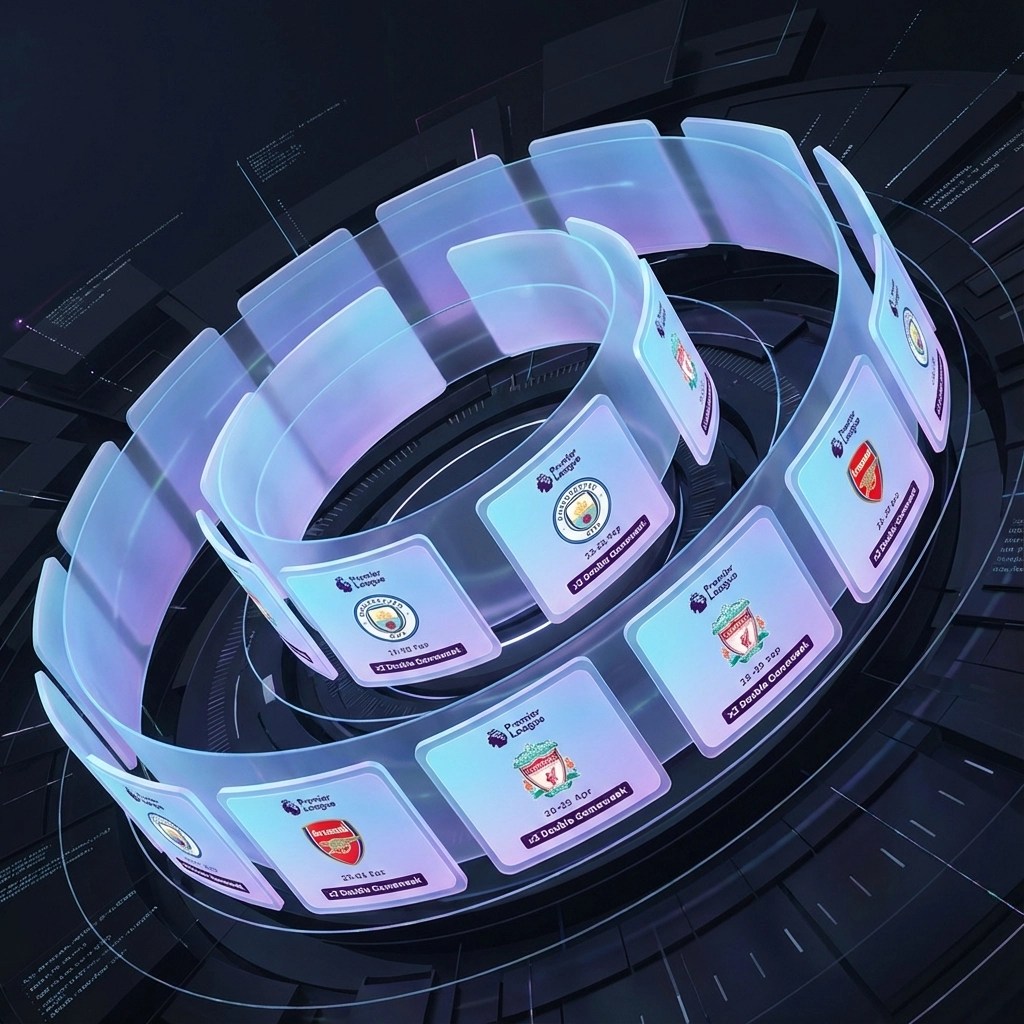
Master Your Chip Strategy: Turn Schedule Chaos Into Points 🔥
Your four premium chips become exponentially more valuable during Double Gameweeks. Here's exactly how to deploy each one for maximum impact:
Triple Captain: Your Nuclear Option
Deploy this on premium attackers with two favorable fixtures. Instead of doubling your captain's points, Triple Captain multiplies them by three. When Mohamed Salah or Erling Haaland faces two home matches against weaker opposition, this chip can deliver 60+ points from a single player.
Pro timing tip: Don't waste this on defensive players or rotation risks. Target nailed-on attackers from top teams who are guaranteed to start both matches. The difference between a 12-point return (good) and a 36-point return (season-defining) often determines your final ranking.
Bench Boost: Maximum Squad Utilization
This chip activates points from all 15 of your players instead of just 11. During Double Gameweeks featuring multiple teams, your bench players suddenly become point-scoring machines. Even budget defenders can return 8-12 points across two fixtures.
Strategic approach: Plan your Bench Boost 2-3 Gameweeks in advance. Use your transfers to load up on players from teams with confirmed double fixtures, ensuring every position contributes to your total. Many elite managers target Gameweek 36 for this chip, when fixture congestion peaks near the season's end.
Free Hit: Navigate the Chaos
While Free Hit might seem less relevant for Double Gameweeks, it's actually your strategic safety net. Use this chip to completely restructure your team for one Gameweek, then automatically revert to your original squad.
Advanced tactic: Deploy Free Hit during Blank Gameweeks that follow major Double Gameweeks. If you've loaded your regular team with Double Gameweek players, you might face a shortage of available players when those same teams blank the following week. Free Hit lets you temporarily pivot without permanent transfer damage.

Wildcard: The Setup Move
Your Wildcard isn't just about unlimited transfers – it's about positioning for the Double Gameweek bonanza. Use your Wildcard 1-2 Gameweeks before a major Double Gameweek to restructure your entire squad around the fixture list.
This gives you time to monitor rotation risks, injury updates, and form before the crucial week arrives. Smart managers use Wildcard as the setup, then deploy their other chips for the knockout punch.
Perfect Your Timing: When Champions Make Their Move ⏰
The final third of the season is where Double Gameweeks cluster. Cup competitions create a domino effect of postponements, typically generating the most valuable opportunities between Gameweeks 28-38.
Here's the elite manager approach:
Gameweeks 24-25: Prime window for Triple Captain as early Double Gameweeks emerge
Gameweek 34: Often the biggest Blank Gameweek due to FA Cup semi-finals – ideal for Free Hit
Gameweek 36: Traditional Bench Boost territory with maximum fixture congestion
Key insight: Don't just react to Double Gameweeks – anticipate them. Monitor cup draw results and plan your chip usage around likely postponements, not just confirmed ones.
Avoid These Costly Double Gameweek Mistakes ⚠️
Mistake #1: Chasing every Double Gameweek player
Don't abandon form and fixtures for the sake of double appearances. A player with two difficult away fixtures often scores less than someone with one favorable home match.
Mistake #2: Ignoring the following Blank Gameweek
Heavy investment in Double Gameweek players can leave you exposed when those same teams have no fixture the following week. Balance your approach.
Mistake #3: Panic chip usage
Don't waste premium chips on underwhelming Double Gameweeks just because the opportunity exists. Wait for genuine high-ceiling scenarios.
Mistake #4: Forgetting about rotation
Managers rotate more heavily during fixture congestion. Target nailed-on starters, not squad players who might be benched for one fixture.

Your Action Plan: Dominate the Double Gameweeks 🎯
Step 1: Track the Cup Draws
Monitor FA Cup and EFL Cup results to predict which matches will be postponed. This gives you 2-3 weeks advance notice of likely Double Gameweeks.
Step 2: Build Transfer Runway
Maintain 1-2 free transfers heading into Double Gameweek periods. This flexibility lets you pivot quickly when fixtures are confirmed.
Step 3: Prioritize Premium Assets
Focus your Double Gameweek strategy around expensive forwards and midfielders. These players have the highest ceiling for explosive returns across two fixtures.
Step 4: Plan Your Chip Sequence
Map out your remaining chips against the fixture calendar. Don't hoard them – deploy strategically across the season's remaining Double Gameweeks.
Step 5: Monitor Team News Obsessively
During Double Gameweeks, team news becomes critical. Managers rest key players, especially in less important fixtures. Stay updated on rotation risks.
Turn Fixture Chaos Into Championship Points
Double Gameweeks separate the casual players from the championship contenders. While others scramble to understand the fixture changes, you'll be positioned to maximize every opportunity.
The reality: Most FPL managers waste their premium chips or deploy them reactively. By planning your Double Gameweek strategy in advance, you're already operating at a level above 90% of your competition.
Your chips are premium ammunition – don't waste them on average opportunities. Wait for the perfect Double Gameweek storms, then deploy everything for maximum impact.
Ready to gain your unfair advantage this season? Start tracking cup results, plan your chip sequence, and prepare to dominate when the Double Gameweeks arrive. Your mini-league won't know what hit them.
Check out FPL Coach for advanced tools that help you identify and prepare for upcoming Double Gameweeks before your rivals even notice the opportunity.