Are You Still Picking Your FPL Team Without Data? Here's Why That's Costing You Rank

Every weekend, millions of Fantasy Premier League managers make the same costly mistake. They scroll through player lists, check last week's scores, maybe glance at upcoming fixtures, and call it strategy. Meanwhile, the managers climbing past them are using something far more powerful: data.
If you're still picking your FPL team based on gut feelings, player popularity, or yesterday's hat trick, you're fighting a losing battle. Here's the uncomfortable truth about why your rank keeps sliding, and how to fix it.
🧠 Your Brain Isn't Built for FPL Success
Your mind is an incredible pattern-recognition machine, but it's terrible at processing the sheer volume of information that determines FPL success. When you manually select players, you're unconsciously making these rank-killing errors:
Recency bias dominates your decisions. That striker who scored twice last week suddenly looks like a must-have, even though his underlying stats suggest it was a fluke. Your brain gives disproportionate weight to recent events while ignoring the bigger picture.
You can't simultaneously optimize multiple variables. FPL requires balancing 15 players across specific positions, staying within budget, maintaining no more than three players per club, considering fixture difficulty, player form, injury risk, and rotation probability. Your brain simply cannot process all these constraints simultaneously and find the optimal solution.
Emotional attachment clouds judgment. You hold onto that premium defender because you paid 6.5m for him, even though the data screams that his clean sheet probability has plummeted. You chase last season's top scorers without accounting for changing team dynamics.

📊 What Data-Driven Selection Actually Looks Like
While you're checking if Kane scored last weekend, data-driven approaches are analyzing thousands of data points across multiple dimensions. Here's what algorithms consider that your manual selection misses:
Expected Goals (xG) and Expected Assists (xA) reveal which players are getting genuine scoring opportunities versus lucky finishes. A player with high xG but low actual goals is often a better pick than someone who scored a deflected winner.
Fixture Difficulty Rating combined with historical performance shows not just who has "easy" games, but how specific players perform against defensive styles. Some forwards thrive against high-pressing teams but struggle against low blocks.
Advanced defensive metrics like tackles, blocks, and aerial duels won for defenders, plus clean sheet probability based on team defensive stats and opponent attacking metrics.
Form analysis across rolling time periods identifies players entering purple patches before they become obvious template picks. The best data models spot trends 2-3 gameweeks before they become apparent to manual selectors.
Team chemistry indicators measured through successful passes, assists, and positional play show which attacking partnerships are developing: crucial for predicting assist potential.
⚡ The Competitive Edge You're Missing
Research demonstrates that data-driven FPL selection significantly outperforms manual approaches. Mathematical optimization models that simultaneously solve multiple constraints: team selection, budget management, and formation requirements: consistently achieve higher scores while maintaining better rank stability.
Timing advantages compound over time. Data identifies emerging players before price rises, spots rotation risks before they cost you points, and flags injury concerns before they become obvious. Getting ahead of these trends by even one gameweek creates massive rank advantages.
Pattern recognition at scale reveals hidden value. Algorithms identify players whose stats suggest they're underperformed relative to their underlying metrics: essentially finding future point scoring at current discount prices.
Consistency beats brilliance. While manual selection might occasionally nail a differential captain pick, data-driven approaches deliver steady, above-average returns week after week. This consistency is what builds green arrows over full seasons.

🎯 Real Examples of Data Beating Intuition
Consider these scenarios where data-driven selection creates immediate advantages:
The Template Trap: Popular players often become overpriced relative to their point-scoring potential. When 40% of managers own the same forward, algorithms identify similar-priced alternatives with better underlying metrics and easier fixtures.
Fixture Swing Analysis: Manual selectors see "Liverpool vs Manchester City" and think both attacks are risky. Data analysis reveals which players historically perform well in high-scoring games versus which ones get nullified by strong defenses.
The Rotation Roulette: You think that midfielder is nailed, but data tracking minutes, tactical changes, and manager quotes suggests rotation risk is increasing. Getting ahead of these changes prevents dead-end transfers.
Price Change Predictions: Algorithms track ownership changes, transfer trends, and performance metrics to predict price rises before they happen, allowing strategic early moves that casual managers miss entirely.
💡 Why "Eye Test" Fails in Modern FPL
The traditional approach of watching games and trusting your football knowledge worked when FPL was simpler. Modern Fantasy Premier League operates at a different level of complexity:
Millions of active managers mean the obvious picks are already priced efficiently. Edge comes from finding value others miss: something human analysis struggles with at scale.
Advanced statistics now drive real-world football decisions. If Premier League clubs use xG, heat maps, and predictive modeling for £100m transfer decisions, shouldn't you use similar data for your fantasy team?
The information gap between data-driven and manual selection grows larger each season. While you're watching Match of the Day highlights, algorithms are processing real-time statistical feeds, injury reports, and tactical analyses.
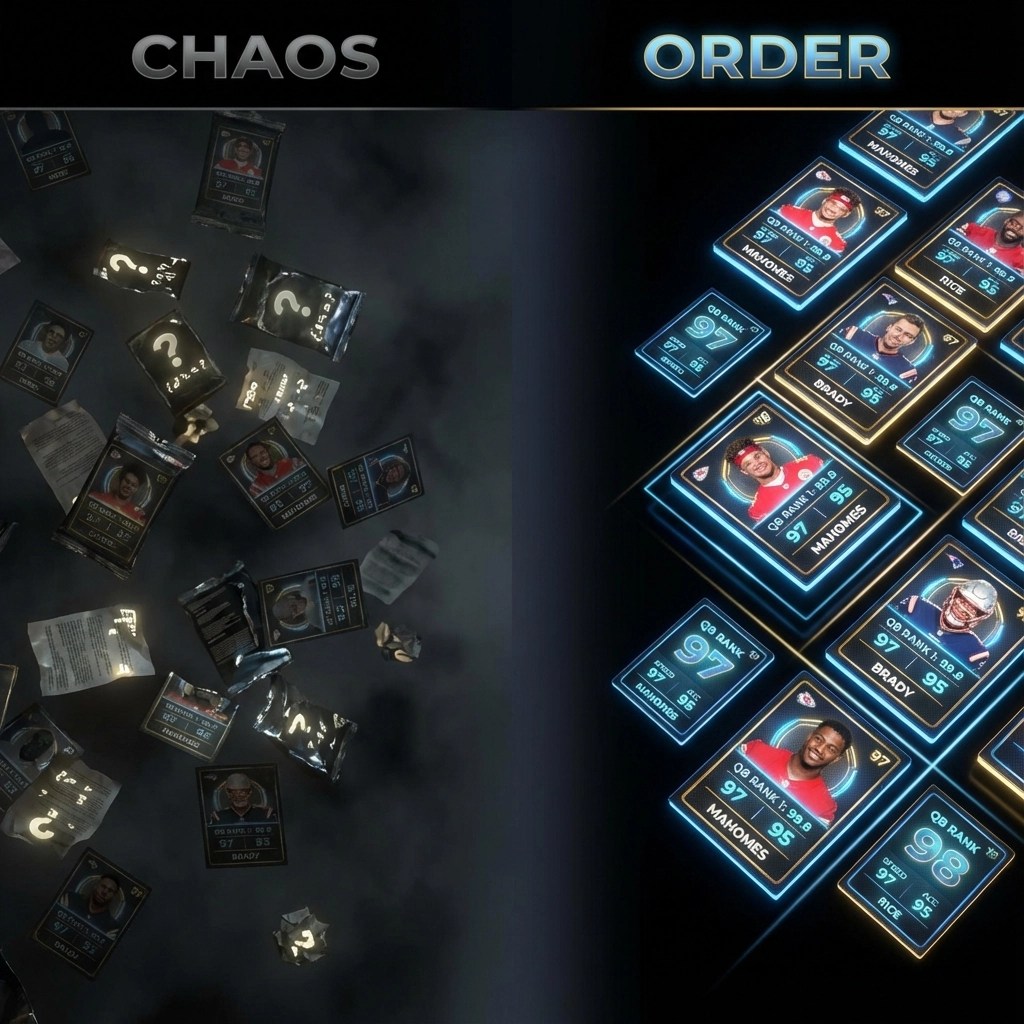
🚀 Making the Switch to Data-Driven Selection
Transitioning from manual selection doesn't mean abandoning your football knowledge: it means amplifying it with powerful analytical tools. Here's how smart managers are gaining their unfair advantage:
Start with underlying stats over actual returns. A player averaging 0.8 xG per game with three blanks is likely a better pick than someone with two goals from 0.3 xG. The first player's returns will normalize upward; the second's will regress.
Use fixture analysis beyond "difficulty." Look at how specific player types perform against different tactical setups. Some midfielders excel against teams that press high, creating counter-attacking opportunities.
Track ownership trends for differential timing. Smart data use isn't just about picking good players: it's about picking them before everyone else notices. Early identification of emerging assets creates price rise profits and rank advantages.
Optimize your bench strategy. Algorithms determine the minimal investment needed for bench players who won't hurt you when they don't play, freeing budget for premium picks where it matters.
📈 Your Rank Depends on Information Advantage
Every gameweek you stick with manual selection, you fall further behind managers using data-driven approaches. They're making smarter transfers, timing captaincy better, and identifying value picks while you're still debating between two similar-looking players based on last weekend's performance.
The managers reaching elite ranks aren't necessarily better at watching football: they're better at processing the information that predicts future performance. They've stopped guessing and started winning.

🏆 Stop Leaving Points on the Pitch
Your current FPL rank reflects your current strategy. If you want different results, you need a different approach. Data-driven selection isn't about removing the fun from Fantasy Premier League: it's about winning more consistently while others struggle with the same old methods.
The choice is simple: keep making decisions based on limited information and hope for the best, or start using the same analytical advantages that separate elite managers from the rest.
Your mini-league rivals won't tell you they've upgraded their approach. They'll just keep climbing past you, gameweek after gameweek, using information advantages you're ignoring.
Ready to gain your unfair advantage? Join thousands of FPL managers who've already made the switch to data-driven success. Stop guessing( start winning.)
Your rank will thank you.